New Driveways
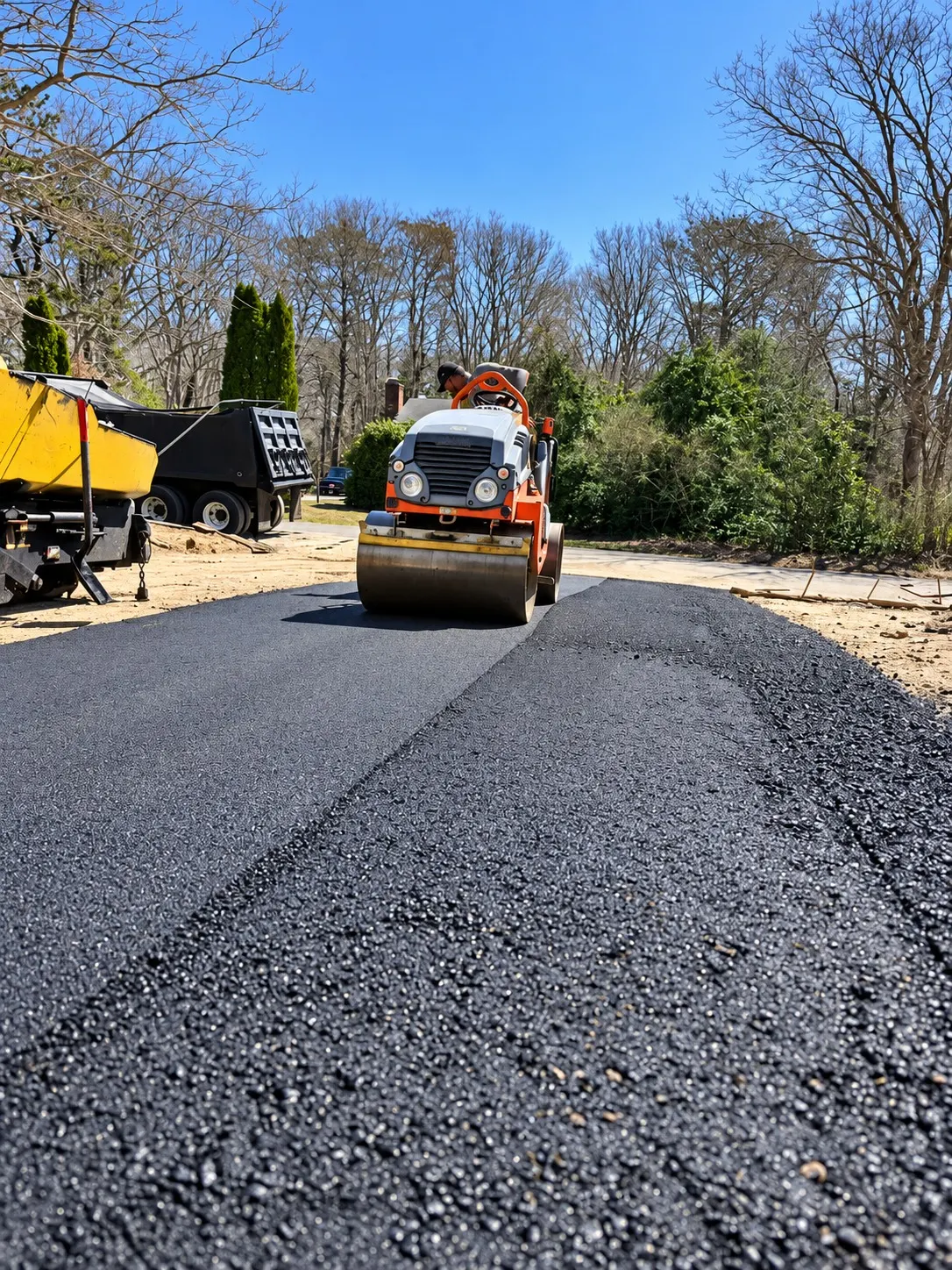
Full installation including excavation, base preparation, compaction, and the asphalt surface.
Asphalt Paving
New installation, full replacement, resurfacing, and overlays — built on a base that can actually carry the surface.
Written and reviewed by Renato Carneiro, Owner, RS Superior Sealcoating and PavingLast updated
A new asphalt surface is only as good as what is under it. On Cape Cod that means accounting for sandy sub-base material, water that has nowhere to go, and freeze-thaw movement that pulls pavement apart over the winter. Before any paving is scheduled, we evaluate the existing base, the grade, the edges, and where water travels across the property.
Depending on that assessment, the correct work may be a full removal and rebuild, an overlay on a sound existing surface, or a replacement with corrected grading. Those are different jobs with different costs and different lifespans, and we explain which one your property needs and why.
A new installation builds the driveway from the ground up, including excavation, base material, compaction, and the asphalt surface. An overlay adds a new layer over pavement that is still structurally sound — a good option when the base is intact but the surface is worn. A replacement removes failing pavement and rebuilds it, and it is the right answer when the base has broken down or drainage must be corrected.
Applying an overlay over a failed base is the most common shortcut in this trade. It looks correct for a season and then reflects every crack and soft spot underneath. We do not recommend it as a way to save money on a driveway that needs rebuilding.
New asphalt needs time. Light vehicle traffic is typically fine within one to three days depending on temperature, but the surface continues to harden for weeks. Avoid sharp turning while stationary, point loads such as jack stands or trailer jacks, and parking in the same spot every day during that period. We review this with you at the final walkthrough.
Scope
Full installation including excavation, base preparation, compaction, and the asphalt surface.
Removal of failed pavement and a rebuild that corrects the base and grading problems that caused the failure.
A new surface layer over pavement that is still structurally sound but worn or aged.
Additional paved area for parking, turnarounds, or access, tied properly into the existing surface.
Commercial paving for lots, private roadways, and access areas with traffic loads in mind.
Transitions at the street, garage, and entry points where pavement takes the most stress.
Questions
Compare Options
| Service | Best fit | What it addresses | Not a fix for |
|---|---|---|---|
| Sealcoating | Structurally sound asphalt | Surface oxidation and exposure | Base failure or alligator cracking |
| Crack sealing | Isolated working cracks | Water entry through cracks | Widespread failed pavement |
| Section repair | Localized failed areas | Potholes, edges, and weak sections | Failure across the full surface |
| Replacement | Widespread structural failure | Failed surface, base, and grading | Routine cosmetic maintenance |
Related Services
Surface maintenance for asphalt that is still serviceable but showing age and exposure.
Crack cleaning, preparation, and crack-filling or hot-pour sealing based on the condition of the pavement.
Localized failures, broken edges, failed patches, and pothole-type damage on driveways and commercial pavement.
Send the property details and we will confirm what the pavement needs, what it does not, and what the work involves.