Stall Restriping
Restoration of parking stall lines to the existing layout of the property.
Line Striping
Bring a lot back into service with clear stalls, directional markings, and access aisles after sealcoating or paving.
Written and reviewed by Renato Carneiro, Owner, RS Superior Sealcoating and PavingLast updated
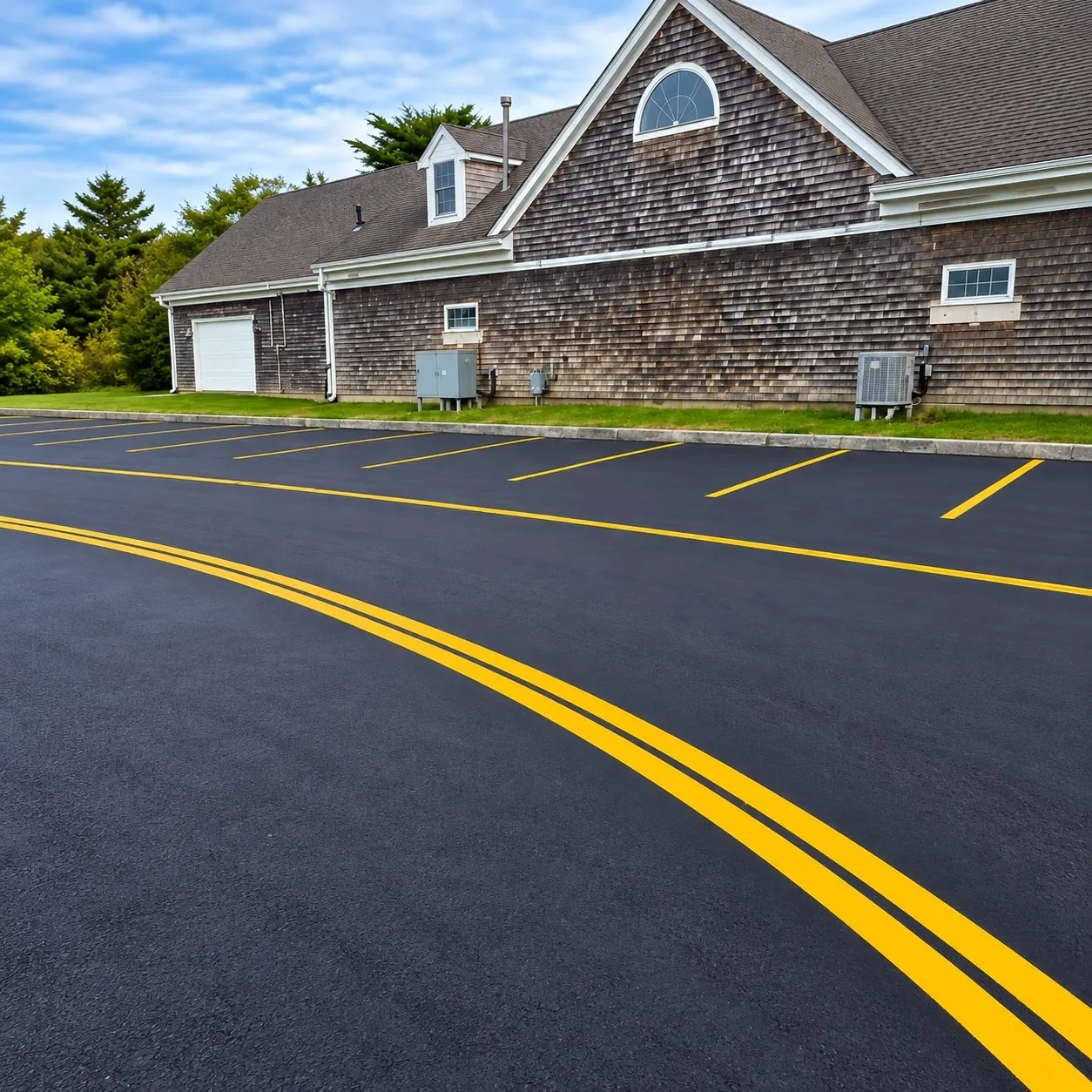
Pavement markings wear from traffic, plowing, sun, and salt. Once they fade, drivers park inconsistently, circulation breaks down, and the lot holds fewer vehicles than it was designed for. Restriping restores the intended layout and the capacity that goes with it.
Striping is also the final step after surface work. Sealcoating and resurfacing cover existing markings entirely, so the layout has to be reinstated before the lot returns to normal use.
We restripe to the existing layout so the lot returns to the configuration your property already uses, including stalls, directional arrows, crosswalk markings, and access aisles. Any layout changes should be confirmed with you and, where applicable, reviewed against local requirements before the work is scheduled.
Paint needs dry pavement and suitable temperatures to bond and cure. After sealcoating, the surface must cure before striping goes down. We coordinate the sequence so the lot is out of service once rather than twice.
Scope
Restoration of parking stall lines to the existing layout of the property.
Arrows, lane lines, and circulation markings that keep traffic moving correctly.
Marking of accessible spaces and adjacent access aisles as part of the layout.
Painted curbs, loading zones, and no-parking areas where the layout requires them.
Markings reinstated after sealcoating or resurfacing covers the previous layout.
Clean, dry pavement and suitable conditions so paint bonds and holds.
Questions
Compare Options
| Service | Best fit | What it addresses | Not a fix for |
|---|---|---|---|
| Sealcoating | Structurally sound asphalt | Surface oxidation and exposure | Base failure or alligator cracking |
| Crack sealing | Isolated working cracks | Water entry through cracks | Widespread failed pavement |
| Section repair | Localized failed areas | Potholes, edges, and weak sections | Failure across the full surface |
| Replacement | Widespread structural failure | Failed surface, base, and grading | Routine cosmetic maintenance |
Related Services
New driveways, replacement, resurfacing, overlays, extensions, parking lots, aprons, and paved access areas.
Surface maintenance for asphalt that is still serviceable but showing age and exposure.
Crack cleaning, preparation, and crack-filling or hot-pour sealing based on the condition of the pavement.
Send the property details and we will confirm what the pavement needs, what it does not, and what the work involves.