Crack Cleaning
Debris, sand, and vegetation removed so the material bonds to clean crack walls.
Crack Filling & Sealing
Water entering a crack is how most Cape Cod pavement fails. Treating cracks early is the cheapest work you will ever do on a driveway.
Written and reviewed by Renato Carneiro, Owner, RS Superior Sealcoating and PavingLast updated
Once water gets past the surface it saturates the base material. In winter it freezes, expands, and lifts the pavement; in spring it thaws and leaves voids. The crack widens, the edges break down, and what began as a hairline separation becomes a structural failure that requires repair or replacement.
Treating cracks while they are still narrow is the highest-return maintenance available for asphalt. It costs a fraction of repair and delays replacement by years.
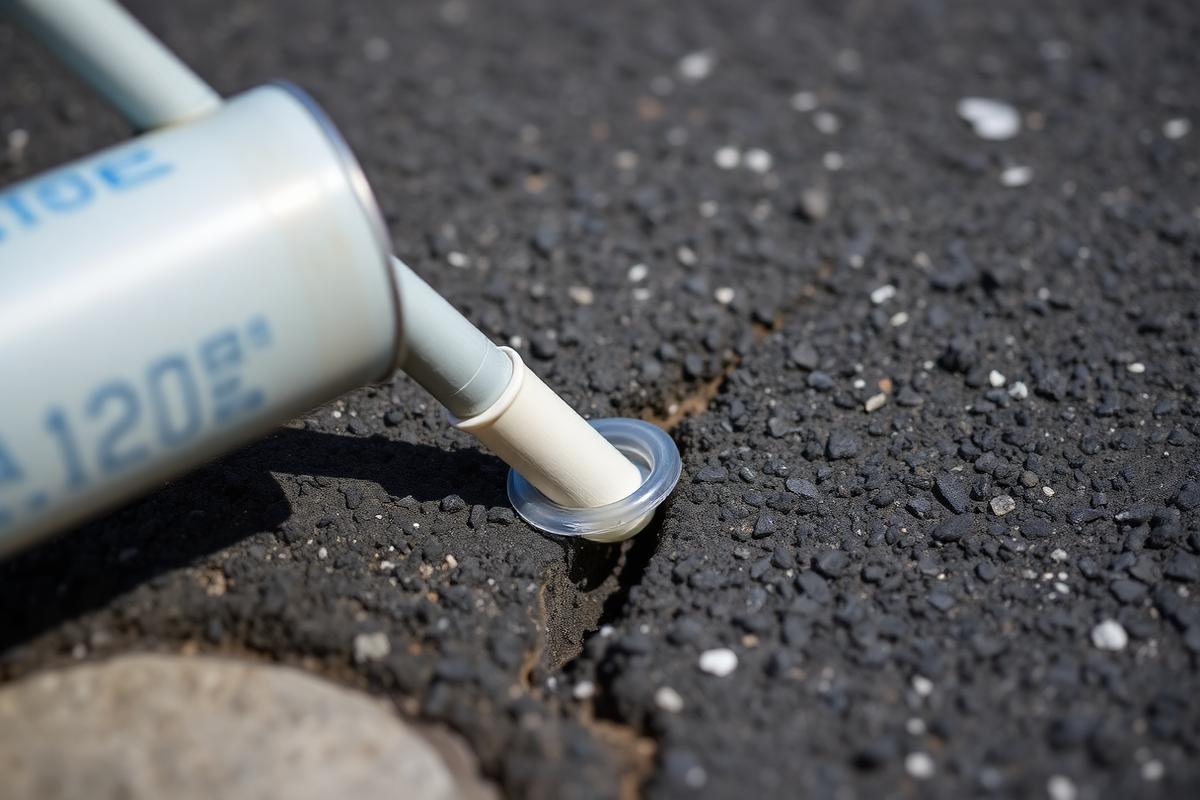
Crack filling places material into the crack to block water. It suits narrow, non-working cracks that are not moving much with temperature. Hot-pour crack sealing uses a flexible material applied hot that bonds to the crack walls and can move with the pavement through the seasons. It is the better treatment for working cracks that expand and contract.
We choose the method based on crack width, movement, and the overall condition of the surface, and we tell you which one we are recommending and why.
Material placed into a dirty or wet crack does not bond. Cracks are cleaned of debris, sand, and vegetation before any material goes in. Skipping that step is why so much crack work fails within a single season.
Interconnected alligator cracking indicates base failure rather than a surface separation. Filling it does not restore structure. In those areas we recommend repair or replacement instead of a treatment that will not hold.
Scope
Debris, sand, and vegetation removed so the material bonds to clean crack walls.
Material placed into narrow, non-working cracks to block water intrusion.
Flexible hot-applied sealant for working cracks that move with temperature changes.
Attention to joints and transitions where pavement meets other surfaces.
Identification of areas where cracking signals base failure rather than a surface issue.
Crack treatment completed before sealcoating so the finished surface performs correctly.
Questions
Compare Options
| Service | Best fit | What it addresses | Not a fix for |
|---|---|---|---|
| Sealcoating | Structurally sound asphalt | Surface oxidation and exposure | Base failure or alligator cracking |
| Crack sealing | Isolated working cracks | Water entry through cracks | Widespread failed pavement |
| Section repair | Localized failed areas | Potholes, edges, and weak sections | Failure across the full surface |
| Replacement | Widespread structural failure | Failed surface, base, and grading | Routine cosmetic maintenance |
Related Services
New driveways, replacement, resurfacing, overlays, extensions, parking lots, aprons, and paved access areas.
Surface maintenance for asphalt that is still serviceable but showing age and exposure.
Localized failures, broken edges, failed patches, and pothole-type damage on driveways and commercial pavement.
Send the property details and we will confirm what the pavement needs, what it does not, and what the work involves.