Surface Cleaning
Removal of dirt, sand, and vegetation so the sealer bonds to the pavement rather than to debris.
Sealcoating
Surface protection for asphalt that is still sound but exposed to sun, salt, water, and traffic.
Written and reviewed by Renato Carneiro, Owner, RS Superior Sealcoating and PavingLast updated
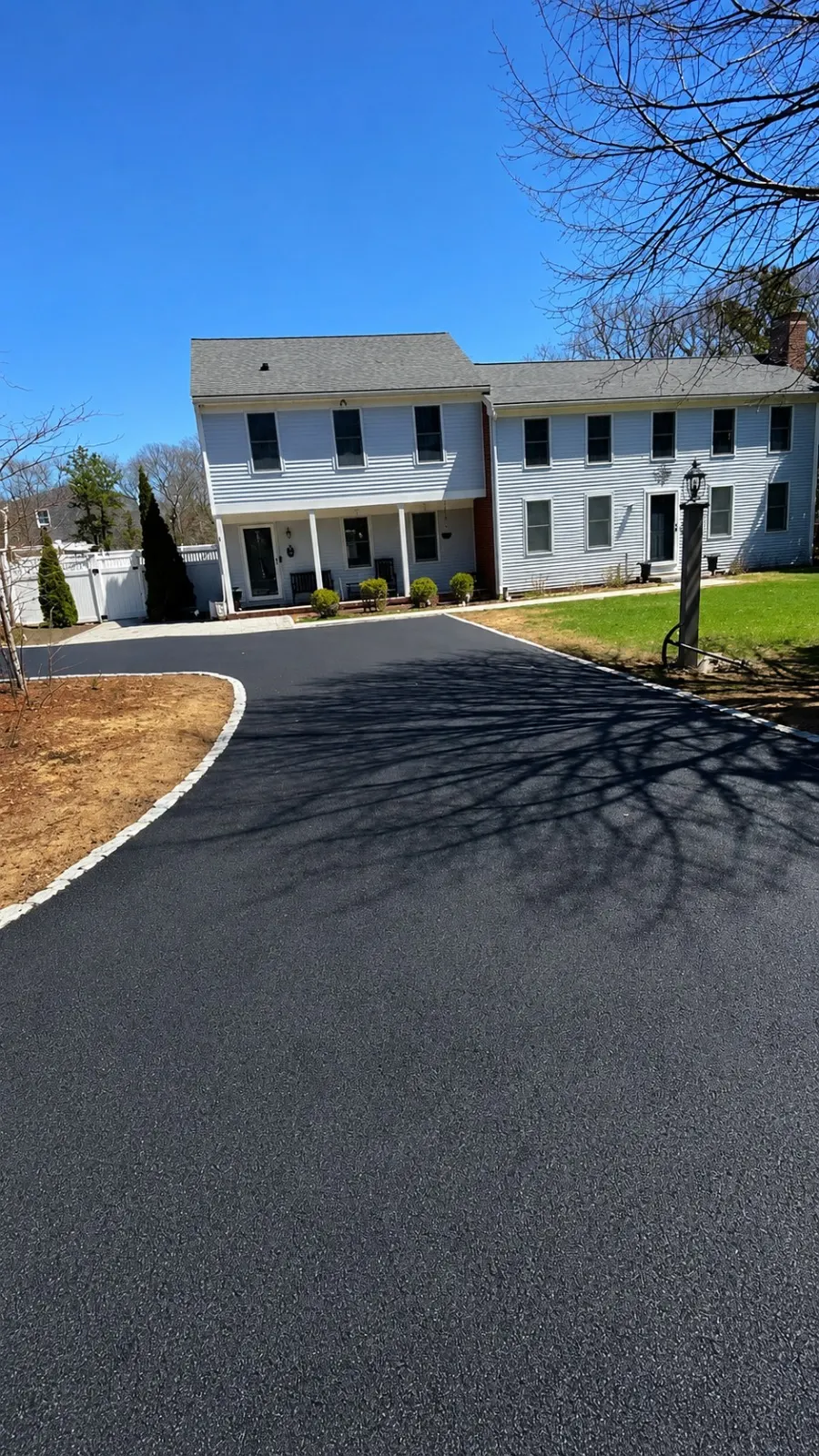
Asphalt degrades from the top down through oxidation, ultraviolet exposure, water intrusion, and salt. Sealcoating puts a protective layer over the surface to slow that process, restore a uniform appearance, and make the pavement easier to clean and maintain.
It is maintenance. Applied at the right time to pavement in the right condition, it extends the useful life of the surface meaningfully. Applied to pavement that is already breaking apart, it hides the problem for one season and delays a repair that is only going to get more expensive.
The sealer is the last step, not the job. The surface has to be cleaned of dirt, sand, and vegetation, oil spots have to be treated so the sealer bonds, and cracks should be addressed before sealing rather than sealed over. Edges and transitions are cut in by hand so the finished line is clean against garages, walkways, and landscaping.
If the pavement has widespread alligator cracking, soft or sinking areas, standing water, or crumbling edges, the base is the problem and sealing the top will not solve it. In those cases we recommend repair or replacement and tell you so directly, even though sealcoating would be the easier sale.
Most Cape Cod driveways benefit from sealcoating every two to four years. The correct interval depends on sun exposure, traffic volume, drainage, and how the surface has weathered — not on a fixed calendar. Over-sealing can build excessive film thickness, which creates its own cracking problems.
Scope
Removal of dirt, sand, and vegetation so the sealer bonds to the pavement rather than to debris.
Treatment of contaminated areas where sealer would otherwise fail to adhere.
Identification of cracks that should be filled or sealed before the surface is coated.
Hand-cut edges along garages, walkways, and landscaping for a clean finished line.
Even application across the surface with attention to coverage and film thickness.
Clear instructions on how long to stay off the surface and how to care for it afterward.
Questions
Compare Options
| Service | Best fit | What it addresses | Not a fix for |
|---|---|---|---|
| Sealcoating | Structurally sound asphalt | Surface oxidation and exposure | Base failure or alligator cracking |
| Crack sealing | Isolated working cracks | Water entry through cracks | Widespread failed pavement |
| Section repair | Localized failed areas | Potholes, edges, and weak sections | Failure across the full surface |
| Replacement | Widespread structural failure | Failed surface, base, and grading | Routine cosmetic maintenance |
Related Services
New driveways, replacement, resurfacing, overlays, extensions, parking lots, aprons, and paved access areas.
Crack cleaning, preparation, and crack-filling or hot-pour sealing based on the condition of the pavement.
Localized failures, broken edges, failed patches, and pothole-type damage on driveways and commercial pavement.
Send the property details and we will confirm what the pavement needs, what it does not, and what the work involves.